Category: Cool places to go

  • A bittersweet tour of chocolate

    A bittersweet tour of chocolate

    As I tentatively sip a watery concoction of cacao, almonds and chili, the possibility that this bitter-spicy beverage is even a form of chocolate seems remote, let alone that under my crinkled nose froths the ancient precursor to all chocolate as we know and love it.

    But history is a lot like taste — surprising, born of the bitter stuff and prone to unlikely combinations. Chocolate makes a great case study. While the chocolate we know today is more closely associated with European machines, West African soils and global appetites, the origins of cacao are in preColombian Latin America, where it has been grown, revered and served unsweetened for at least a millennium.

    On a recent day at Sibú Chocolate, an artesanal chocolatier and cafeteria located a short drive from Academia Tica Coronado, most of us discretely push aside the little cups filled with Montezuma’s spicy recipe for orgiastic fortitude, eyes fastening instead on a selection of truffles, each like a tiny sculpture molded to exacting specifications artfully arranged on gleaming white plates.

    But there is to be no gobbling of the gourmet chocolate on this tour. Restraint reigns as we listen to Julio Fernandez, co-founder of Sibú and Costa Rican historian, deliver an in-depth lecture. He prompts us to try each truffle as his story touches upon its origins. We are thousands of years into the story of chocolate before a Dutch chemist figures out how to produce it in solid form, like those so temptingly arranged on the table before us. Fernandez enlivens this long story with artifacts arranged all over Sibú’s garden cafeteria: from sticks and stone mortars to baroque oil paintings, WWII pin-ups and some chocolate-flavored product picked up at a local supermarket, for strictly anthropological purposes, of course.

    “This is not chocolate,” Fernandez shakes his head disapprovingly as he holds up the plastic bag. This gesture becomes more frequent as his narration moves into the 20th century, when global demand turned more and more chocolate into product.

    Founded by Fernandez and his American partner George Soriano, Sibú goes against this grain. “The (Sibu) concept is bean-to-gourmet-bar, and it has quite a few benefits. With higher-quality, handmade cacao, Soriano says he can ask a higher price and fairly pay farmers,” explained a recent report in the Tico Times.

    The eight different varieties of chocolate we try during the tour all come from cacao beans grown at a single organic plantation on the Caribbean coast. The aim is to be uniquely sustainable while crafting flavors that are uniquely Costa Rican. Fernandez says Tico chocolate has a bolder, more bitter taste than African chocolate, though it is less resistant to pests. Despite their cutesy names, like “frosty pod rot” or “witch broom,” certain molds have led to the near collapse of the cacao industry in Costa Rica over the last thirty years, causing farmers to turn to livestock raising and other forms of agriculture, accelerating deforestation. (Cacao thrives in the shade and can be grown in a biologically diverse ecosystem, though some research suggests that these benefits can be relatively short-lived when coupled with pressure to produce high yields every season.)

    In 1975, three years before the first frosty pod rot epidemics wiped out whole plantations on the Pacific Coast, Costa Rica produced nearly 7,000 tons of cacao beans. By 2012, that had dropped to just 700 tons, a 90% decrease. Meanwhile, production in West Africa’s Cote D’Ivoire increased a staggering 575 percent during the same 37-year period, according to statistics from the United Nations Food and Agriculture Administration. The human cost accompanying Africa’s cacao boom is incalculable, with nearly 820,000 child laborers working on Cote D’Ivoire cacao plantations.

    -Emily Jo Cureton

    Academia Tica students enjoy some coffee after a tour of Sibù Chocolate in Heredia.
    Academia Tica students enjoy some coffee after a tour of Sibù Chocolate in Heredia.
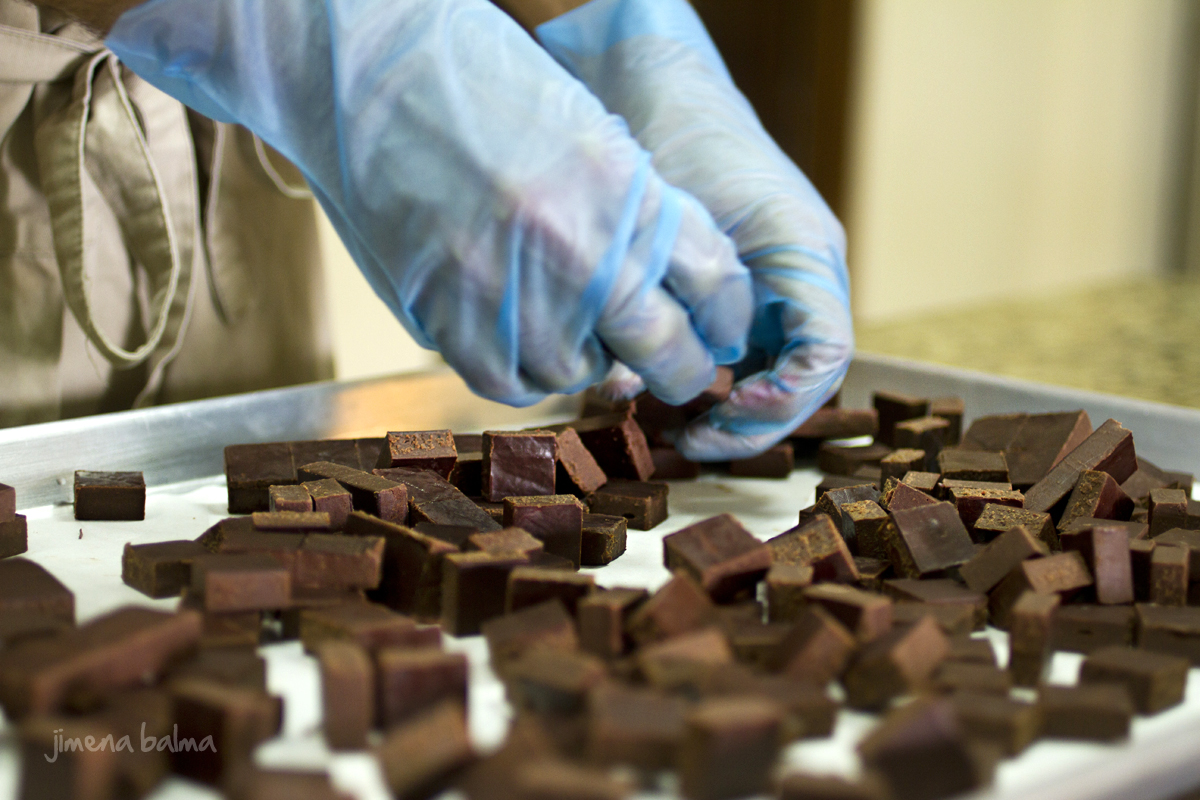
    Organic chocolate being prepared at Sibú in Heredia, Costa Rica.
    Organic chocolate being prepared at Sibú in Heredia, Costa Rica.
  • Changing face in Escazú

    Changing face in Escazú

    When we pull up to his Escazú home, Gerardo Montoya hits play.

    Parade sounds fill this sleepy neighborhood in the hills overlooking Costa Rica’s capital city. Crashing cymbals and snare drums punch off time as we walk down the driveway towards a garage workshop where our host awaits, dancing among the monsters he’s created, many of them large enough to swallow a man whole.

    He cuts the music and announces:

    “Meet my second family!”

    There is el Chupacabra the blood sucking goat killer, just chilling next to Martina the spunky abuela. There are grinning diablos crowding long-nosed brujas, witches in cahoots with their equally hideous boyfriends, the brujos. There’s the hot pink-cheeked Rosita, a fat Spanish madam who spends most of her time with the hairless, tirelessly ambitious el Calvo. There’s la Segua, half beautiful woman, half dead horse. Her hobbies include hanging around water and scaring the pants back on unfaithful husbands. There’s Pancho the humble rancher, El Chino the racial stereotype and in the back there is Gerardo, a mask modeled after its maker, the likeness uncanny.

    The “real” Gerardo Montoya beams as he explains the family history. His grandfather was Pedro Arias, one of the most famous mid-century Costa Rican mask-makers or mascareros, who defined an aesthetic style still used all over the country to make these paper mâché  “payasos,” beloved guests at every popular festival or celebration, prone to spontaneous dancing and the chasing of children.

    Montoya founded this workshop about 20 years ago, after hard times drove the family to sell its farmland in Escazú. Property values promptly sky-rocketed. Montoya has said within three years the German investor who bought that two hectare property was offered more than triple the amount he paid. This kind of story is typical of the rapid transformation taking place in this increasingly affluent cantón, 8 kilometers from central San José.

    To get to the mask workshop, we first pass “new” Escazú’s towering condominiums, its gleaming skyscrapers and a colossal shopping mall. We don’t stop at Hooter’s, nor at the liquor store with an LED sign called La Bruja. We ascend narrow residential streets lined with locked gates, shiny cars and for sale signs featuring swimming pools. Near the end we pass an historic Catholic Church, a mural dedicated to cattle ranching and a 100-year-old adobe house where legend has it a real witch once lived. Finally, we climb the steepest grade yet, toward the cloud forests of Pico Blanca. Half-way up we arrive at Montoya’s home and workshop, 200 meters past the water treatment plant where he now works as a technician.

    That’s his day job, but “…This is happiness for me,” he says, motioning to the masks.

    “To sell a mask would be like selling a son.”

    Though, he does have seven of them. (Sons, that is.) Two have learned to make the traditional masks, using clay to create molds that are then covered in strips of newspaper soaked in yucca gum, left to dry, mounted on wooden or metal frames and painted. It´s a month-long process before they are ready. Montoya doesn’t sell the masks, instead renting them to municipalities for popular festivals, which abound in Costa Rica. Famous for exemplifying the Central Valley style, Montoya’s masks were even used during the 1998 presidential inauguration of Miguel Angel Rodríguez.

    At our tour Pedro Montoya, one of the seven sons, disappears under the skirt of a giganta, her gaudily made-up face and blonde hair a parody of a colonial Spanish dueña. He begins to dance like there’s nothing at all precarious about this situation, flirting shamelessly with our driver and facilities manager, Ricardo.

    Next we assume some strange forms ourselves.

    Upon reflection, wearing that mask and dancing like a maniac in Montoya’s driveway reminds me of learning Spanish through immersion. The giddiness and the sweat. The sense that whatever I want to convey is distorted by what I can convey. Feeling foolish and realizing that is actually kind of fun. The exaggerated gestures and lack of subtlety. The smiles and the laughter. The art of not taking oneself too seriously.

    -Emily Jo Cureton

    Academia Tica students masquerade at Montoya's Escazú studio, home to traditional Costa Rican masks  used for festivals around the country.
    Academia Tica students masquerade at Montoya’s Escazú studio, home to traditional Costa Rican masks used for festivals around the country.


  • A crocodile kind of day

    A crocodile kind of day

    If the crocodile cares when a tourist throws a coconut at him from the Rio Grande de Tárcoles bridge, his face betrays nothing. He lunges and snaps instinctively, but promptly discards it, coconuts being among the few things an American Crocodile won’t eat.

    Still, there is no trace of disappointment in his reptilian eyes, no sigh like annoyance in the breath he may surface to draw only once every hour, nothing spiteful in the way his back scales (called scutes) ripple muddy water, patiently circling. For all humanity throws his way, the crocodile remains inscrutable.

    By now, the American Crocodiles that hang out under this famous bridge in the Pacific Central region of Costa Rica are accustomed to diverse offerings from above, some tasty, some inedible, all launched by humans who stop to gawk from the relative safety of the bridge. Near this aerial viewpoint, the entrance to Carara National Park offers access to primary rain forest, waterfalls and ideal crocodile habitat, just a few minutes drive from Jacó. Biologists estimate more than 2,000 crocs inhabit parts of the Tárcoles River basin, a system that flows all the way from the volcanic highlands near our Coronado campus to the coast near our Jacó location.

    Since it is World Environment Day and crocodiles are pretty timelessly fascinating, we decided to take a little extra time on our way between schools to loiter on the bridge connecting our campuses and consider one of Coast Rica’s most ancient predators, both fearsome and fragile in today’s world.

    The average adult male crocodile is 4.3m (over 14 ft) long.  He can live 70 years. His diet consists primarily of fish, but can include pretty much anything fleshy that crosses his path, coconuts excepted.  He does not rely solely on eyes or ears to find food, but can sense its precise location using dome receptors — little black dots visible around the sides of his jaws. This sixth sense is a fortunate adaptation for the Tárcoles crocs, who may be literally blindsided by climate change.

    Lately longtime observers of the river have noticed increasing cases of blindness in adult male crocodiles. Scientists initially hypothesized that contamination from cities and farms must be causing some kind of blinding infection. However, initial investigations (i.e. five people capturing, hog-tying and sitting on 1,200 lb. crocs while a veterinarian warily checks the eyes), revealed that blunt trauma is a more likely cause than pollution. It appears only adult males are going blind, seemingly due to gnarly injuries sustained in fights with other adult males.

    Meanwhile, the gender dynamics of the Tárcoles croc population are changing. Where there used to be about three females for every male, now it’s more like 1:1. Theory goes, the decline of a female-dominated society is leading to more eye-poking feuds between males during mating season.

    But why the sudden uptick in male crocodiles?

    The sex of a crocodile is determined by temperature: the warmer the nest, the more the males. Leading crocodile experts believe that climate changes, particularly localized effects caused by deforestation in the Tárcoles basin, are causing warmer temperatures in the crocs’ nesting habitat. Less trees may mean more male crocodiles, more fighting over female crocodiles, and eventually, no female crocodiles at all.

    From the Tárcoles bridge our coconut-throwing kind might imagine these enormous reptiles are living much as they did in the age of dinosaurs. However, rapid environmental changes instigated by humans are in fact changing their reality, perhaps disastrously. We scan the muddy banks of the river, looking for females jealously guarding nests dug into verdant cover. The babies will be born soon, entering the world with the first heavy rains. At first nurtured as a tight-knit clan by a protective mother, at five weeks they are capable of hunting insects and small fish and will eat each other should the pickings get too slim.

    Sea turtles are less famous for this kind of unapologetic survivalism, but like crocodiles develop with temperature-dependent sex determination and face possible extinction by climate change, in addition to habitat destruction. Programs exist on both coasts to bolster turtle conservation efforts, for which our students routinely volunteer.

    -Emily Jo Cureton

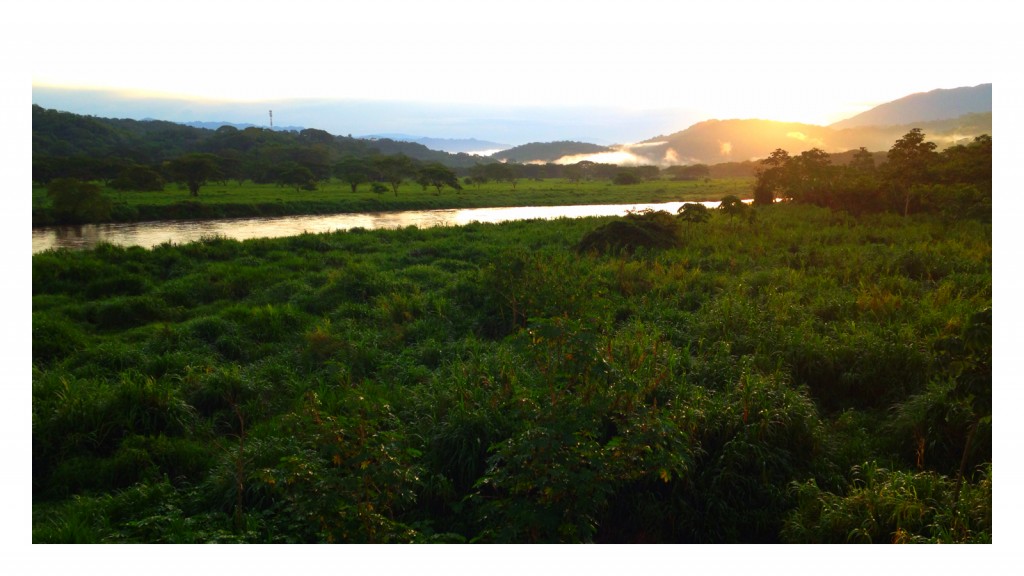
    Sunrise over the   Rio Grande de Tarcoles, where thousands of American Crocodiles make their home.
    Sunrise over the Rio Grande de Tarcoles, where thousands of American Crocodiles make their home.
  • Into the volcano! (one of them anyway)

    Into the volcano! (one of them anyway)

    The distinction between earth and sky seems more an ongoing negotiation than a fact from atop Irazú, the tallest active volcanic peak in Costa Rica and an easy half-day trip from Academia Tica’s Coronado campus.

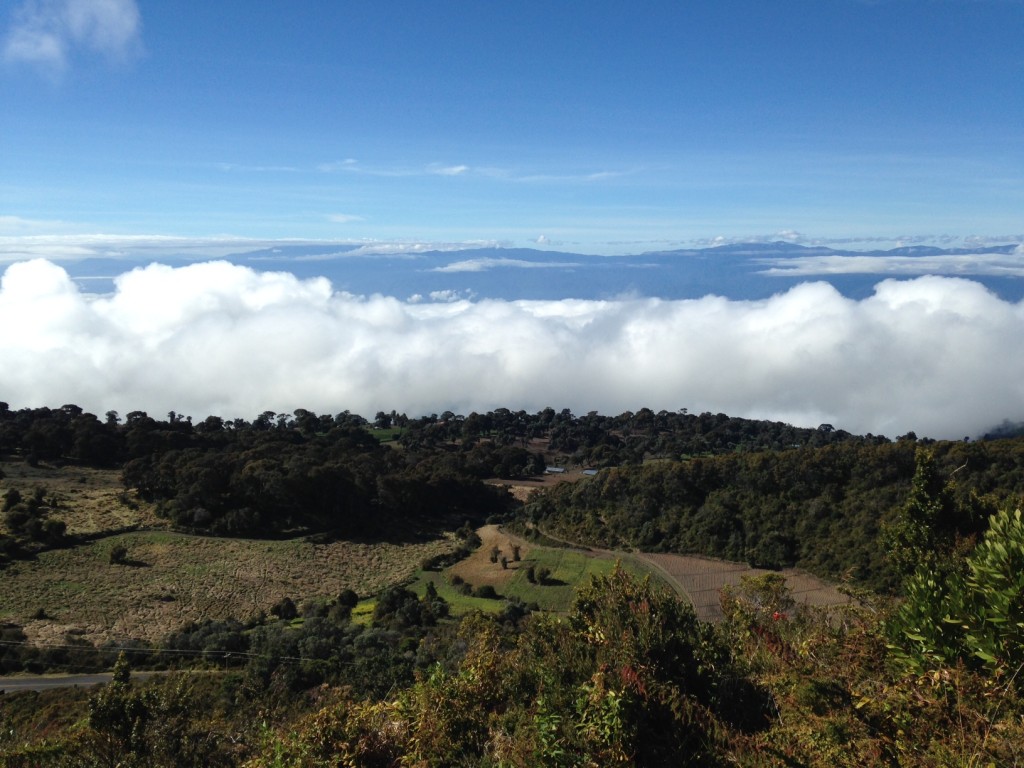
    There are more clouds below us than above on this dry May morning. They unfurl at our feet like plush white carpets reaching all the way to the Caribbean Gulf on one side and the Pacific on the other.

    The view from a ridge line above the principal crater at Parque Nacional Volcan Irazu, the highest volcanic peak in Costa Rica, an easy and incredibly scenic day trip from Academia Tica Coronado.

    On a clearer day we could see two oceans at once, a staggering perspective unique to this place in Central America. But even in the company of clouds and intermittent fog we can take in all of Central Costa Rica, a dense mosaic of rain forests, farm, rivers and mountains, home to over 500,000 thousand species of life and counting.Looking away from the limitless horizon to the black sand underfoot. Eyes plummet 300-meters down to the bottom of Irazu’s principal crater, a monumental hole in the ground painted lifeless grays and blacks by the same process that created the brilliant greens surrounding us, highly productive and populated agricultural regions.

    Irazú formed in the Pleistocene era, (between 2 million and 12,000 years ago). In the past 100 years the volcano has experienced seven eruption cycles, the latest occurring from 1963-65, when debris choked rivers and flooded the city of Cartago. San Jose (and nearby Academia Tica) are a much safer distance away, though one account recorded 20 inches of ash falling on parts of the city during the 1963-65 eruptions. While often pictured with an ephemeral lake, Costa Rica is in the middle of a dry spell (by tropical standards), and the bottom of the crater is dry and visible this year. This ever shifting topography masks two roiling magma chambers another 3000 meters below the surface.

    Tempted to try out ground as nebulous and inviting as the sky, but signs warn us that gravity slides can result from the slightest disturbance of the barren slopes. The national park here provides drive-up access and paved paths to the principal crater, utilizing a relatively stable terrace on the south side called Playa Hermosa, where hardy plants and animals stake claim on the volcanoes first habitable areas.

    Scraggly tufts of grass dotting Playa Hermosa eventually thicken enough to host picnicking Tico families, low shrubs make a tenuous comeback, and then the first fierce little Myrtle trees post up. Sparseness ends abruptly at a tree line so dense we can only hear the human visitors laughing, scrambling and clamoring within it. Climbing into this forest on the edge of desolation, we startle hummingbirds and lizards galore, ascending to a ridge above the principal crater where we are rewarded with even more epic views of this strange and wonderful place.

    Uniquely accessible for an active volcano, Parque Nacional Volcan Irazu is an easy day trip for students at Academia Tica, who can go with an organized tour group or independently via bus, rental car or taxi. Irazu is but one of many volcanoes that forge the highland backbone of Costa Rica.