Month: July 2014

  • A bittersweet tour of chocolate

    A bittersweet tour of chocolate

    As I tentatively sip a watery concoction of cacao, almonds and chili, the possibility that this bitter-spicy beverage is even a form of chocolate seems remote, let alone that under my crinkled nose froths the ancient precursor to all chocolate as we know and love it.

    But history is a lot like taste — surprising, born of the bitter stuff and prone to unlikely combinations. Chocolate makes a great case study. While the chocolate we know today is more closely associated with European machines, West African soils and global appetites, the origins of cacao are in preColombian Latin America, where it has been grown, revered and served unsweetened for at least a millennium.

    On a recent day at Sibú Chocolate, an artesanal chocolatier and cafeteria located a short drive from Academia Tica Coronado, most of us discretely push aside the little cups filled with Montezuma’s spicy recipe for orgiastic fortitude, eyes fastening instead on a selection of truffles, each like a tiny sculpture molded to exacting specifications artfully arranged on gleaming white plates.

    But there is to be no gobbling of the gourmet chocolate on this tour. Restraint reigns as we listen to Julio Fernandez, co-founder of Sibú and Costa Rican historian, deliver an in-depth lecture. He prompts us to try each truffle as his story touches upon its origins. We are thousands of years into the story of chocolate before a Dutch chemist figures out how to produce it in solid form, like those so temptingly arranged on the table before us. Fernandez enlivens this long story with artifacts arranged all over Sibú’s garden cafeteria: from sticks and stone mortars to baroque oil paintings, WWII pin-ups and some chocolate-flavored product picked up at a local supermarket, for strictly anthropological purposes, of course.

    “This is not chocolate,” Fernandez shakes his head disapprovingly as he holds up the plastic bag. This gesture becomes more frequent as his narration moves into the 20th century, when global demand turned more and more chocolate into product.

    Founded by Fernandez and his American partner George Soriano, Sibú goes against this grain. “The (Sibu) concept is bean-to-gourmet-bar, and it has quite a few benefits. With higher-quality, handmade cacao, Soriano says he can ask a higher price and fairly pay farmers,” explained a recent report in the Tico Times.

    The eight different varieties of chocolate we try during the tour all come from cacao beans grown at a single organic plantation on the Caribbean coast. The aim is to be uniquely sustainable while crafting flavors that are uniquely Costa Rican. Fernandez says Tico chocolate has a bolder, more bitter taste than African chocolate, though it is less resistant to pests. Despite their cutesy names, like “frosty pod rot” or “witch broom,” certain molds have led to the near collapse of the cacao industry in Costa Rica over the last thirty years, causing farmers to turn to livestock raising and other forms of agriculture, accelerating deforestation. (Cacao thrives in the shade and can be grown in a biologically diverse ecosystem, though some research suggests that these benefits can be relatively short-lived when coupled with pressure to produce high yields every season.)

    In 1975, three years before the first frosty pod rot epidemics wiped out whole plantations on the Pacific Coast, Costa Rica produced nearly 7,000 tons of cacao beans. By 2012, that had dropped to just 700 tons, a 90% decrease. Meanwhile, production in West Africa’s Cote D’Ivoire increased a staggering 575 percent during the same 37-year period, according to statistics from the United Nations Food and Agriculture Administration. The human cost accompanying Africa’s cacao boom is incalculable, with nearly 820,000 child laborers working on Cote D’Ivoire cacao plantations.

    -Emily Jo Cureton

    Academia Tica students enjoy some coffee after a tour of Sibù Chocolate in Heredia.
    Academia Tica students enjoy some coffee after a tour of Sibù Chocolate in Heredia.
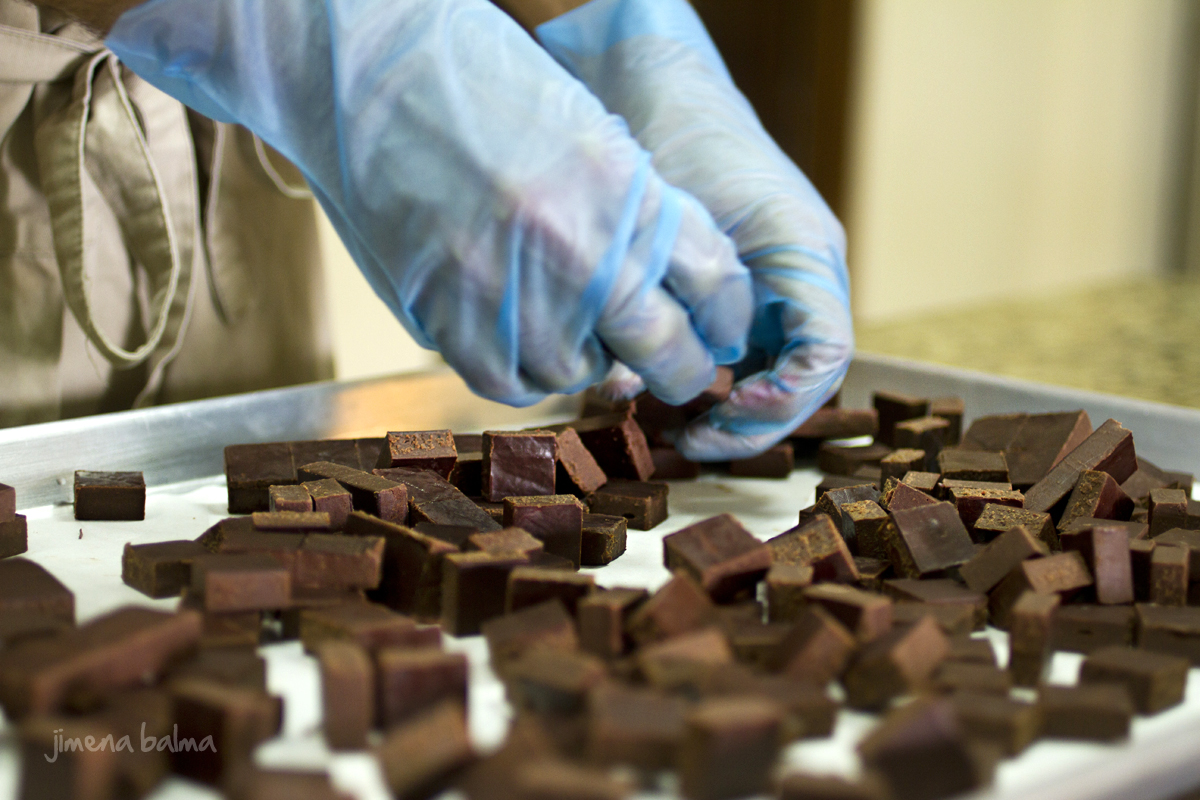
    Organic chocolate being prepared at Sibú in Heredia, Costa Rica.
    Organic chocolate being prepared at Sibú in Heredia, Costa Rica.
  • Changing face in Escazú

    Changing face in Escazú

    When we pull up to his Escazú home, Gerardo Montoya hits play.

    Parade sounds fill this sleepy neighborhood in the hills overlooking Costa Rica’s capital city. Crashing cymbals and snare drums punch off time as we walk down the driveway towards a garage workshop where our host awaits, dancing among the monsters he’s created, many of them large enough to swallow a man whole.

    He cuts the music and announces:

    “Meet my second family!”

    There is el Chupacabra the blood sucking goat killer, just chilling next to Martina the spunky abuela. There are grinning diablos crowding long-nosed brujas, witches in cahoots with their equally hideous boyfriends, the brujos. There’s the hot pink-cheeked Rosita, a fat Spanish madam who spends most of her time with the hairless, tirelessly ambitious el Calvo. There’s la Segua, half beautiful woman, half dead horse. Her hobbies include hanging around water and scaring the pants back on unfaithful husbands. There’s Pancho the humble rancher, El Chino the racial stereotype and in the back there is Gerardo, a mask modeled after its maker, the likeness uncanny.

    The “real” Gerardo Montoya beams as he explains the family history. His grandfather was Pedro Arias, one of the most famous mid-century Costa Rican mask-makers or mascareros, who defined an aesthetic style still used all over the country to make these paper mâché  “payasos,” beloved guests at every popular festival or celebration, prone to spontaneous dancing and the chasing of children.

    Montoya founded this workshop about 20 years ago, after hard times drove the family to sell its farmland in Escazú. Property values promptly sky-rocketed. Montoya has said within three years the German investor who bought that two hectare property was offered more than triple the amount he paid. This kind of story is typical of the rapid transformation taking place in this increasingly affluent cantón, 8 kilometers from central San José.

    To get to the mask workshop, we first pass “new” Escazú’s towering condominiums, its gleaming skyscrapers and a colossal shopping mall. We don’t stop at Hooter’s, nor at the liquor store with an LED sign called La Bruja. We ascend narrow residential streets lined with locked gates, shiny cars and for sale signs featuring swimming pools. Near the end we pass an historic Catholic Church, a mural dedicated to cattle ranching and a 100-year-old adobe house where legend has it a real witch once lived. Finally, we climb the steepest grade yet, toward the cloud forests of Pico Blanca. Half-way up we arrive at Montoya’s home and workshop, 200 meters past the water treatment plant where he now works as a technician.

    That’s his day job, but “…This is happiness for me,” he says, motioning to the masks.

    “To sell a mask would be like selling a son.”

    Though, he does have seven of them. (Sons, that is.) Two have learned to make the traditional masks, using clay to create molds that are then covered in strips of newspaper soaked in yucca gum, left to dry, mounted on wooden or metal frames and painted. It´s a month-long process before they are ready. Montoya doesn’t sell the masks, instead renting them to municipalities for popular festivals, which abound in Costa Rica. Famous for exemplifying the Central Valley style, Montoya’s masks were even used during the 1998 presidential inauguration of Miguel Angel Rodríguez.

    At our tour Pedro Montoya, one of the seven sons, disappears under the skirt of a giganta, her gaudily made-up face and blonde hair a parody of a colonial Spanish dueña. He begins to dance like there’s nothing at all precarious about this situation, flirting shamelessly with our driver and facilities manager, Ricardo.

    Next we assume some strange forms ourselves.

    Upon reflection, wearing that mask and dancing like a maniac in Montoya’s driveway reminds me of learning Spanish through immersion. The giddiness and the sweat. The sense that whatever I want to convey is distorted by what I can convey. Feeling foolish and realizing that is actually kind of fun. The exaggerated gestures and lack of subtlety. The smiles and the laughter. The art of not taking oneself too seriously.

    -Emily Jo Cureton

    Academia Tica students masquerade at Montoya's Escazú studio, home to traditional Costa Rican masks  used for festivals around the country.
    Academia Tica students masquerade at Montoya’s Escazú studio, home to traditional Costa Rican masks used for festivals around the country.


  • ¡Gracias Sele! Celebration discounts

    ¡Gracias Sele! Celebration discounts

    Costa Rica is out of the run for World Champion, but the whole world cheered as they finished unbeaten in 5th place, just under four of the historically strongest national teams.

    We celebrate this fantastic performance as the underdogs, and all the passion that it inspired not only in Ticos, but in people everywhere praising the names of Jorge Luis Pinto, Bryan Ruiz, Joel Campbell, Celso Borges and Keylor Navas, among others. We would like to honor La Sele’s trip to Brazil 2014 with 25% flash discount!!

    The rules:

    • 25% discount over tuition fees.
    • Only valid for Main Group courses, minimum of 2 weeks and has to be taken during 2014. Courses can be combined with private lessons for a “Combination” course or with a Surf program (charged separately).
    • Special ends: July 31st.
    • Applies for courses taken at both campuses: Coronado and Jacó Beach.
    • First 5 bookings will receive a Costa Rica World Cup Kit!
    • Current accommodation discounts for student residence (Coronado) and shared apartments (Jacó) apply as well (10%).

    We hope you’ll join us with the celebration! For any questions, contact us!

    Learn more about the school & our courses here.

  • What’s on in July?

    What’s on in July?

    This is going to be a fun month!

    Events coming up include the University cinema’s “Month of Laughter,” music festivals, a national surf championship, traditional Costa Rican and American celebrations and a “Night at the museum(s)”.

    4th of July Picnic
    For all the Americans who are going to be in Costa Rica for the Independence Day, the American Colony Committee organizes this annual picnic at the Cervecería Nacional near the International Airport from 9 am to 1 pm. Enjoy a piece of homeland culture with food, music, shows, sports and a flag raising ceremony. Fireworks at the Avenida Escazú at 7 pm make this day complete.

    Under Rock Festival
    This music event is lead by five different bands and a DJ rocking the stage at Mundoloco el Chante in San Pedro on the 4th of July at 7 pm.

    International Calypso Festival
    For the second time the Calypso Festival happens in the Caribbean town Cahuita this weekend, July 4th-6th, including national and international music acts, sports, games, and more: the festival has something to offer everyone.

    Fashion Week
    Visit the most important fashion event of Costa Rica this month. From July 10th to 13th national and international designers present the new trends with live runways, shows and workshops at the Antigua Aduana in San José.

    Art City Tour
    This event gives you the chance to see many of the museums and galleries in San José for free from 5 pm to 9 pm on July 16th. The provided shuttle take you from one spot to another.

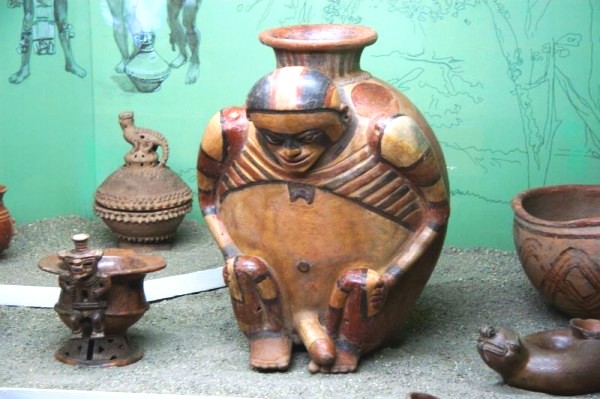
    Precolumbian Art
    Pieces of pre-Columbian art you can see at the museums in San José during the Art City Tour (Photo by redcultura.com)

    Two traditional Costa Rican events
    The week-long festival of the Virgin of the Sea (July 13th to 20th) in honor of the patron saint Carmen comes along with horse parades or colorful regattas in Puntarenas and in Playas del Coco. Another event is the Day of Guanacaste (July 25th) celebrating the annexation of Nicoya from Nicaragua with rodeos, parades, typical food and music acts in different cities.

    Gran Final Reef 2014
    On the long weekend, July 25th-27th, the best surfers of Costa Rica flock to Playa Hermosa (near Jacó) to show their skills and try to return home with the title “National Champion”. The competitions will take place from 7 am to 4 pm daily and are accompanied by shows of “Las Chicas Reef”, concerts and parties in the surrounding beach bars, an air show and last but not least the big award ceremony.

    University Cinema
    July’s theme of the free movies on the campus is “Month of Laughter”. Comedies like Some like it hot, La loca historia del mundo, Shhh! Top secret! and many more are shown on Thursdays and Fridays starting with a discussion at 5:30 pm and the actual screening at 6:30 pm at the Auditorium of Law (Avenida 13, San Pedro).

    Also check out the regular events going on around the capital.