
Month: October 2015

  • 10 money saving tips for traveling in Costa Rica

    10 money saving tips for traveling in Costa Rica

    “Costa Rica is so expensive”. That’s the reaction of many travelers who come to the Switzerland of Central America. And it’s true that it may be more expensive than other Latin American countries. But it is such a gorgeous, varied travel destination you surely won’t regret!

    Also, how often are you in Costa Rica? Do you really want to skip a rafting tour because it costs 70$ and thereby miss a one-time experience? Keep in mind that saving money sometimes means cutting on fun! Here are some helpful tips on how you can save money when traveling around or on the weekends during your Spanish study.

    Accommodation

    Stay in hostels! You can find many nice, cheap hostels in Costa Rica (from 7$ per night). If you book them through pages like booking.com, look for their daily specials.

    Apart from this, why not use private offers from locals? On pages like HomeAway, VRBO and Airbnb, locals offer a stay for little money. And on Couchsurfing, you even find a free stay and get in touch with some ticos!

    Activities

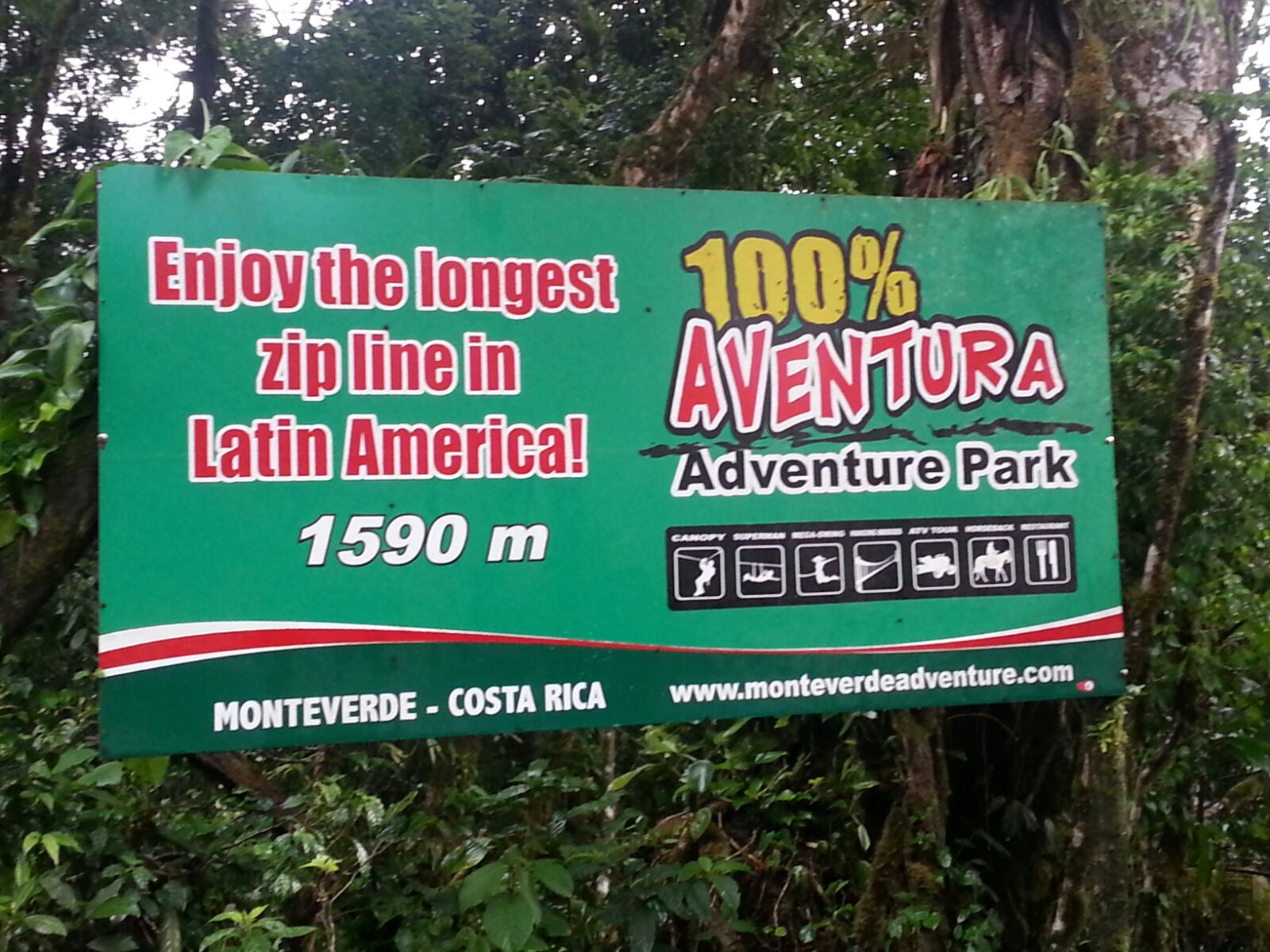
    Always compare tour prices. The same tour could be more expensive in the tourist information center than on the front desk of your hostel. If you want to go hiking in a forest, think about the need of a guide. Observing animals is easier with them and they will explain a lot of interesting things about the nature. But after a few trips, you could also do it on your own and save the guide fee for another tour.
    IMG-20150921-WA0000

    Eating

    Eat like a local! This is where you might save the most and usually one of the main “expensive” claims. Choose the sodas which offer affordable local food (3-6$) instead of expensive restaurants (about 10-20$). Bakeries or street vendors are also good. Look for the places that you see packed of ticos at lunch and not the tour buses.

    Furthermore, many hostels have a little kitchen area that you can use. By sometimes cooking your own food, you can save a lot of money. Another money-saving idea is the water. Apart from the port cities of Limón and Puntarenas and a couple of other places, water just off the tap is potable. However, remember that you may need some time to adjust to the type of water. At school, you can fill your bottles with the filtering water machine, so bring your reusable bottle and use it often!

    Pack a good sandwich when traveling or when going on a tour and bring a snack. This will save on lunch money in touristic places that might be expensive.

    Know the currency

    Economically, it’s best to pay in cash in colones. However, in most places and situations, US dollars are accepted, too. The change will be in colones. Usually, Costa Ricans are honest people, but there are always exceptions. So keep the currency in mind to be able to check the accuracy of the change to avoid getting ripped off.

    Although we love the convenience of credit cards, you can get discounts in many places when paying cash (always ask!), specially when unfolding considerable amounts.

    Take the public bus

    Getting around in Costa Rica might be more convenient and faster in a private bus. But it will cost you many times more! You can travel around (virtually everywhere) by taking the convenient and punctual public buses for little money (a private bus can cost 45$ whereas the same route only costs 6$ in a public one). Ask at the school desk for bus information, although many routes now have their own websites with updated info.

    Take taxis smartly

    When taking a taxi, negotiate the price in advance or be sure the taximeter is on. If not, you can just ask the driver to please “ponga la María”. Before starting the drive, check the taximeter: it should either say “día”, “sedan” or “Nr. 1”. If another number or “noche” appear, you’ll pay a multiple of the regular price!

    Some apps may help you with your calculations too: Taxiando, SayTaxi, but always use some common sense for traveling by taxi, specially if you already know the routes. And remember, rush hour in Costa Rica is the same as everywhere else!

    Cosmetics

    Buy the cosmetics before getting to Costa Rica! Especially cosmetics like after-sun lotion, sunscreen and insect repellent are quite expensive here.

    Traveling intensively vs. traveling much

    Costa Rica offers many gorgeous places, which could easily tempt you to want to see as many as possible. But why not restrict to a few different, beautiful places and do them intensively? Thereby you can get in touch with locals better and experience their culture. Furthermore, it’s less stressful and you can invest the saved additional transport costs (and time!) for another activity.

    Travel in the “green season”

    If you have the choice, travel in the so called “rainy” or “green season” (May to November). Many tourists are scared off by the rain. But there are so many advantages this season offers:

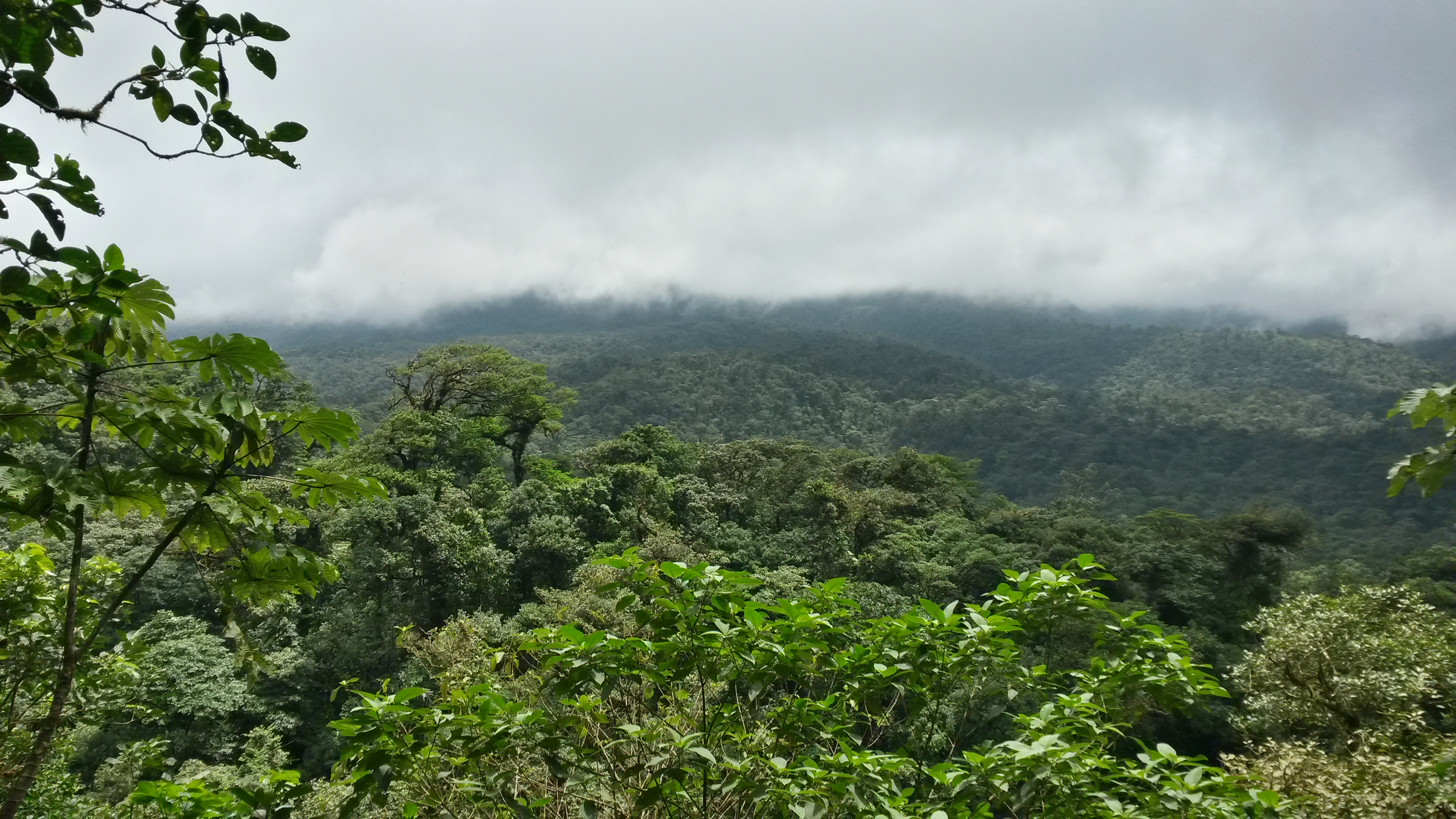
    Many accommodations drop their prices significantly, parks are not overcrowded, the forest comes alive, and you will be able to experience a tropical rain in a rainforest! Rainy season means it rains more, not necessarily all the time.
     

    20150905_123806_Richtone(HDR)

    Bring your student card

    If you have one: bring it! Always ask if there are any student discounts, many parks and other activities (canopy, museums, theatres, cinemas…) offer significant discounts for students. The school will also provide a card stating you’re an Academia Tica student.


    Read it in Spanish!

    ¿Cuántas veces vas a estar en Costa Rica? ¿De verdad vas a omitir un tour de rafting porque cuesta $70 y así renunciar a una experiencia única? ¡Ten en cuenta que ahorrar dinero a veces significa acortar la diversión! Aquí hay unos consejos de cómo ahorrar dinero mientras viajas por Costa Rica durante tu estadía de estudio.

    Hospedaje

    ¡Pasa las noches en hostales! Puedes encontrar un montón de hostales bonitos y baratos en Costa Rica (desde 7$ por noche). Si los reservas usando páginas como booking.com, busca las ofertas especiales del día. Además, ¿por qué no aprovechar las ofertas de personas privadas? En páginas como HomeAway, VRBO y Airbnb los locales ofrecen hospedajes por poco dinero. ¡Y en Couchsurfing, vas a encontrar incluso hospedajes gratis y puedes conocer a ticos!

    Actividades

    ¡Siempre compara los precios de las excursiones! El mismo tour podría ser ofrecido por el centro de información turístico más caro que en la recepción en tu hostal. Si quieres hacer una caminata por algún bosque, piensa si de verdad necesitas un guía. Observar animales es más fácil con ellos y te van a explicar mucho sobre la naturaleza. Pero después de unas caminatas, podrías hacerlas sin guía y ahorrar estos costos para otras aventuras.

    Alimentación

    Come como los locales. Con este punto podrías ahorrar mucho y es generalmente una de las quejas por las que se dice que Costa Rica “es caro”. Escoje las sodas que ofrecen comida típica y económica (3-6$) en lugar de los restaurantes caros (10-20$). Las panaderías y los vendedores en las calles también son buenos. Busca lugares que ves llenos de ticos durante el almuerzo y no donde están los buses de turismo.

    Además, en muchos hostales hay cocinas que puedes usar.  Una posibilidad adicional para ahorrar dinero es el agua. Aparte de las ciudades portuarias y otro par de lugares, el agua del tubo (grifo) es potable en Costa Rica. Recuerda que puede llevar un tiempo ajustarte al tipo de agua. En la escuela puedes usar las máquinas de agua filtrada, así que trae tu botella reusable y utilízala frecuentemente.

    Llévate un buen sandwich (emparedado) a las excursiones o cuando viajas y también una merienda. Así podrás ahorrar en almuerzos que pueden ser bastante caros en los lugares turísticos.

    Conoce el tipo de cambio

    Económicamente, lo mejor es pagar en efectivo en colones. No obstante, en la mayoría de los lugares y situaciones puedes también pagar con dólares estadounidenses (USD). El cambio será en colones. Por eso, ten presente el tipo de cambio para evitar ser estafado.

    Aunque nos encante la conveniencia de las tarjetas de crédito, muchas veces puedes obtener descuentos si pagas en efectivo (pregunta siempre), especialmente si vas a desembolsar un monto considerable.

    Toma el bus público

    Viajar en Costa Rica podría ser más conveniente y rápido en los buses privados. Pero estos también costarán múltiples veces más. Puedes viajar tomando los buses públicos, que también son puntuales y convenientes y más baratos (un viaje que cuesta 45$ en un bus privado puede costar solo 6$ en un bus público).

    Usa los taxis inteligentemente

    Cuando tomas un taxi, deberías negociar el precio por adelantado o asegúrarte que el taxímetro está funcionando. Si no, pídele al taxista que “ponga la María“. Antes de iniciar el viaje, observa el taxímetro: debería decir “día“, “sedán” o “Nr. 1“.  Si aparece otro numero o dice “noche“, pagarás más del precio real.

    Algunas aplicaciones para tu celular te pueden ayudar con los cálculos: Taxiando, SayTaxi, pero siempre usa un poco de sentido común al viajar con taxis, especialmente si ya conoces las rutas. Y recuerda, la hora pico en Costa Rica es igual a la hora pico en cualquier otro lugar.

    Cosméticos

    ¡Compra las cosméticos antes de llegar a Costa Rica! Sobre todo cosméticos como productos hidratantes para después de tomar sol, crema de protección contra el sol (bloqueador) y repelentes de insectos son bastante caros aquí.

    Viaja intensamente vs. viaja mucho

    Costa Rica ofrece un montón de lugares maravillosos que podrían hacerte querer ver lo más posible. ¿Pero por qué no limitarte a algunos lugares bonitos y diferentes y hacerlo intensivamente? Así es más fácil conocer a gente local y experimentar su cultura. Además es menos estresante y puedes invertir los costos de los transportes (¡y tiempo!) para actividades adicionales.

    Viaja en la “temporada verde”

    Si puedes elegir, viaja en la época de las lluvias/verde (de mayo a noviembre). Muchos turistas se intimidan por la lluvia. Pero hay tantas ventajas que esta época ofrece: muchos hospedajes bajan el precio significativamente, los parques no están llenos, el bosque se pone vivo y ¡podrás experimentar la lluvia tropical en un bosque lluvioso! La temporada lluviosa significa que llueve más, no que llueve todo el tiempo.

    Lleva tu tarjeta estudiantil

    Si la tienes: ¡tráela! Siempre pregunta si hay algún descuento para estudiantes, muchos parques y otras actividades (canopy, museos, teatros, cines…) ofrecen descuentos significativos para estudiantes. Además, Academia Tica proveerá un carnet que te identifica como su estudiante.

  • My general impressions of Costa Rica

    My general impressions of Costa Rica

    After a few weeks in Costa Rica, I’ve experienced some facts and got some impressions about this country. Here I tell you a bit more about some of them.

    Food

    The day I arrived in Jacó was a Sunday. I had read in my tourist guide, that only in some bigger cities there were supermarkets which are open on Sundays. And even those, only until noon. But the supermarkets in Jacó were open, even if it was already 6:00 pm! So, I didn’t have to starve on my first day (of course, it would have been possible to go to one of the sodas with typical and quite cheap food, too…).

    In the supermarket, something strange caught my eye: a packet of chips with lemon and salt. Chips with lemon and salt? As I got to know later, there are a few strange combinations that Costa Ricans like: lemon and salt for the salad dressing instead of vinegar and oil, unripe mangoes with salt and pejibayes (which is a fruit tasting similar to marron) with mayonnaise!

    Showers and internet

    Back in the apartment, I learned the next fact: showers in Jacó worked differently to those in Germany. My roommate told me the water was always cold. It took me a while to understand that this was not true: the water doesn’t stay cold, if you turn it up slowly.

    Besides of the misinformation about the opening hours, my tourist guide said, that WiFi wasn’t widespread in Costa Rica. But at least in public places like bars, restaurants and all the hostels I’ve been, there was free WiFi. Maybe this information had been correct a few years ago, but now, luckily, it had changed. Therefore: even with a Facebook addiction, you will survive in Costa Rica very well 😉

    Ticos

    The experience I had been looking forward to the most were the ticos. It’s well-known that Costa Ricans are particularly happy and friendly people. And I was keen to know, how they really were. After a while in Costa Rica I knew, that the ticos were really friendly. When I went to the bank the first time to withdraw money (the cash machine didn’t work so I had to go inside) the woman on the counter advised me to do it in the supermarket in front of the bank, because the fees there were lower. I was pleased about her advice, but I didn’t understand why she told me this. Wasn’t it better for the bank I payed them this fee? In Germany, something like this would never happen to me…

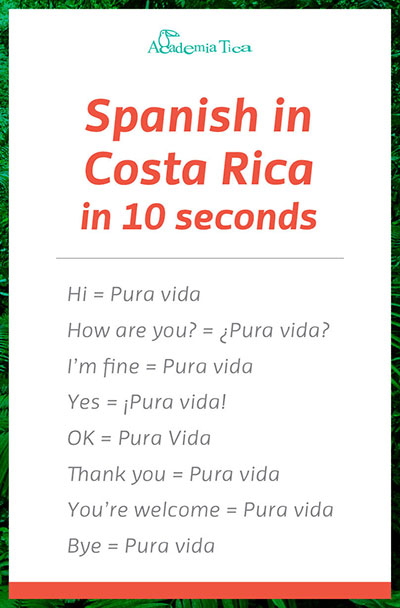
    And when you walk on the streets, you will always be greeted by the people. First, it was a little bit strange to me. But I got used to it and I liked that people greeted each other. In general, they greet you with “¡Pura Vida!” which is more than only a greeting. This phrase corresponds to their attitude to everything. The ticos are satisfied with their life and live here and now: ¡Pura Vida!

    spanish-in-10-sec-2

    Read it in Spanish!

    Después de unas semanas en Costa Rica, he obtenido varias impresiones y experimentado hechos diferentes sobre este país. Aquí les cuento algunas de ellas.

    La comida

    Cuando llegué a Jacó, era domingo. En un guía turística, había leído que solo en algunas ciudades más grandes hay supermercados que tienen abierto los domingos y esto solo hasta el mediodía. ¡Pero los supermercados en Jacó estaban abiertos aunque ya eran las 6:00 pm! Por eso, no tenía que morir de hambre en mí primer día (claro, habría sido posible comer en una de las sodas – con comida típica y barata).

    En el supermercado, me di cuenta de algo raro: una bolsa de papas fritas con limón y sal. ¿Papa fritas con limón y sal? Más tarde me di cuenta que a los costarricenses les gustan algunas combinaciones raras: el limón y la sal son los ingredientes del aderezo para ensaladas, en lugar de vinagre balsámico y aceite. También comen mango verde con sal. ¡Y comen pejibaye (que es una fruta que sabe similar a la castaña) con mayonesa!

    Duchas e internet

    De vuelta en el apartamento, aprendí  el próximo hecho: las duchas en Costa Rica funcionan diferente de las de Alemania. Mi compañera de piso me dijo que el agua siempre era fría. Duró un rato antes de que entendiera que eso no era correcto: el agua no permanece fría si abres la ducha poco a poco.

    Además de la información incorrecta sobre los horarios comerciales,  mí guía turística decía que en Costa Rica,  el wifi no era común. Al menos en lugares públicos como bares, restaurantes y todos los hostales a donde fui, tenían internet gratis. Quizás esta información fue correcta hace unos años, pero ahora, por suerte, ha cambiado. Vas a sobrevivir en Costa Rica, aun si tienes una adicción a Facebook 😉

    Los ticos

    La experiencia que tenía más ganas de tener era conocer a los ticos. Es sabido que los costarricenses son  particularmente felices y amables. Por eso tenía curiosidad de saber cómo eran los ticos realmente. Y después de un tiempo me di cuenta que los ticos son de verdad bastante amables.

    Cuando fui al banco por primera vez para sacar dinero el cajero automático del banco estaba estropeado. La señora en la ventanilla me recomendó sacarlo en el supermercado frente al banco, porque ahí las tasas eran más baratas. Me alegré, pero no entendí por qué ella me había dado esta recomendación. ¿No era bueno para el banco si les pago a ellos esta tasa? En Alemania, nunca me pasaría algo así…

    Y cuando estás caminando por la calle, la gente siempre te saluda. Al principio, era un poco raro para mí, pero me acostumbré de eso y me encantó que uno a otro no se ignoraran. Por lo general, te saludan con ¡Pura Vida! que  es mucho más que solo un saludo. Esta frase corresponde a su actitud hacia todo. Los ticos están contentos con su vida y viven aquí y ahora: ¡Pura Vida!

  • From Jacó Beach to Coronado – Desde Playa Jacó hasta Coronado

    From Jacó Beach to Coronado – Desde Playa Jacó hasta Coronado

    The day I moved from Jacó Beach to Coronado, my watch didn’t work correctly. It was two hours ahead, so I came to Coronado two hours earlier than I had planned (luckily, it was possible to change the bus ticket that I had bought in advance). I was lucky to come early at my new accommodation as it started to rain heavily for the next hours shortly after my arrival . In Jacó Beach, the rain had never bothered me, and sometimes it was even refreshing because of the hot weather. And surfing in the rain could be fun, too.

    When I packed my suitcase in Germany, I thought, maybe I would need a pullover for especially chilly nights. But I didn’t expect to sometimes need one at daytime, too. For that reason, I had only packed one pair of long trousers and (luckily at least) two pullovers. For the lack of adequate clothes for this temperature, I already missed Jacó Beach a bit. But after the next day and a short tour through Coronado, I found the advantages of both places.

    Jacó Beach

    Jacó Beach Sunset
    Sunset in Jacó Beach – Atardecer en Playa Jacó

    In Jacó Beach, it was warm and we have a pool in the garden of the school. There is a nice beach where you can surf, go for a walk or watch the sunset. All the stores and supermarkets are very close to the school apartments and there is also a fantastic “frutería” where I discovered many fruits I had never seen before in Germany. It’s quite a touristic place with a bunch of souvenir shops, bars and restaurants where you can spend the evenings with your friends.

    Coronado

    The church of Coronado, the Costa Rican flag and two rainbows

    Coronado can be cooler, so my advice for everyone: don’t forget to pack some long trousers, pullovers and a jacket for the evenings 😉 As I got to know the first morning, there is a rooster (named Gallo Pinto) in the garden of the campus, which takes its role as alarm clock very seriously.

    In return, the school in Coronado has great things to offer too: the student residence is quite big and bright and is equipped excellently. We have a drier (that is actually unnecessary in Jacó Beach), and the kitchen is well equipped, there is even a rice cooker! On the campus, there is a volleyball net and a table tennis.

    Every noon during the week, Don George comes to the school to bring some typical Caribbean/Costa Rican food like empanadas and tamales. Another service we students really enjoy is the gym at Club Los Jaúles, which is gratis for Academia Tica students. Besides of the swimming pool and the gym at Los Jaúles, the hot showers my roommate had told me about were a reason why I decided to go there (anyways, after a few days I found out, that you could also have a hot shower in the apartment. You only had to turn the water on slowly!).

    The grand supermarkets and the center of Coronado with its beautiful church are located a bit farther (approximately 20 minutes walking) but there are sodas, different restaurants, cafés and stores too. And from Coronado, there is a bus to San José, leaving every 10 minutes. In San José, you can go shopping, watch movies in the cinema, go to the theatre or one of the museums.

    In this way, both schools offer different possibilities, which make them each a nice and interesting place to study Spanish!

    Read it in Spanish!

    El día de mí cambio de Playa Jacó a Coronado, mí reloj tenía algún problema y me indicaba una hora errónea todo el día. Por eso, llegué a Coronado dos horas más temprano (por suerte fue posible cambiar el tiquete de autobús que había comprado antes). Poco después de mi  llegada a Coronado, empezó a llover, así que tuve suerte con haber llegado antes. En Jacó, ha llovido mucho también pero nunca me había importado, porque ahí hacía mucho calor. A veces incluso fue agradable y surfear en la lluvia fue muy divertido.

    Cuando hice mi maleta en Alemania. Pensaba que solo necesitaría una suéter para noches especialmente frías. Pero no era consciente de que de día lo necesitaría a veces también. Por eso, solo había metido un par de pantalones largas y (por suerte al menos) dos sudaderas. Por la falta de ropa adecuada, eché un poco de menos a Jacó, pero después de mi primer día y una vuelta pequeña en Coronado, podía ver varias ventajas de ambos lugares.

    Playa Jacó

    En Jacó, hace mucho calor y hay una piscina en el jardín de la Academia. Hay una playa bonita, donde puedes surfear, dar un paseo o mirar la puesta del sol. Todas las tiendas y supermercados están muy cerca del apartamento, y hay una frutería fantástica, donde puedes encontrar verduras y frutas que nunca antes había visto en Alemania. Es un lugar bastante turístico con muchas tiendas de suvenirs, bares y restaurantes para pasar las tardes con los compañeros.

    Coronado

    Coronado, puede ser un poco fresco, por eso mí recomendación es: no olvide a meter unos pantalones largos, suéter y una chaqueta para noches frescas ;). En la primera mañana me di cuenta que en el jardín vive un gallo (se llama  Gallo Pinto) que toma  su papel como despertador bastante en serio.

    La Academia en Coronado también tiene mucho que ofrecer: el apartamento es bastante grande y luminoso y tiene un equipamiento excelente. Hay una secadora (que por el calor era innecesaria en Jacó). En la cocina hay un horno microondas ¡e incluso una olla arrocera! En el campus, hay una red de voleibol y tenis de mesa. Cada día durante la semana, Don George llega en la tarde para llevar comidas y refrescos típicos del Caribe y de Costa Rica, como empanadas y tamales.

    Algo más que nos gusta mucho es el gimnasio en el Club Los Jaúles cerca de la escuela (que es gratis para estudiantes). Aparte de la piscina y el gimnasio en el Los Jaúles, una razón para ir allí fue que mi compañera de residencia me había dicho que el gimnasio tenía duchas calientes (bueno, después de unos días entendí que es posible tener una ducha caliente en la residencia también, ¡solo tienes que abrir el agua despacio!).

    Los supermercados grandes y el centro de Coronado con su Iglesia linda están a unos 20 minutos pero aquí hay sodas, varios restaurantes, cafés y tiendas diferentes también. Y desde Coronado, cada 10 minutos sale un autobús a San José, donde tienes la posibilidad de ir de compras o visitar varios museos, teatros  o cines.

    Ambas academias ofrecen posibilidades diferentes, que las hacen un lugares bonitos e interesantes para aprender español.