Tag: Emily Jo Cureton

  • Amazing corn

    Amazing corn

    We loaded our plates with fresh empañadas, cheesy tortillas and sweet chorreadas, unwrapping huge banana leaves to reveal steaming tamales filled with  veggies and meat. We ohhed, ahhed and salivated over the tamal asado, a sticky sweet cornbread that frankly put me over the edge of satisfied, too full to try any more typical Costa Rican dishes made from maize, the star ingredient in this Tuesday tasting class.

    When we look at any Costa Rican table today, chances are at least one thing on it was born of corn, that versatile staple vital to life all over the Americas since time immemorial. If we were to dig in the gooey sediment of Guanacaste lakes, we would uncover 5,000 year old maize pollens. If we dove to the bottom of Arenal Lagoon, we might resurface with charred cobs from 2000 BC. But even as technology like carbon-dating and genetic sequencing shuck the history of modern maize, its origins remain mysterious and its future uncertain.
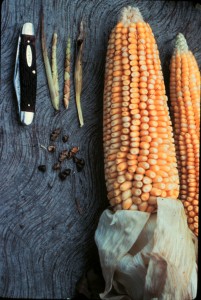
    Modern corn with its diminutive ancestor, teosinte.
    Modern corn with its diminutive ancestor, teosinte.

    Most scholars agree maize was domesticated between 7,500 and 12,000 years ago in Mexico. Its nearest wild relative is a grass species called teosinte, in which each teeny tiny kernel is enclosed in a hard shell. It remains unclear how prehistoric Americans managed to cultivate the starchy stuff of tamales from this unpromising ancestor, itself barely a mouthful, hardly worth the effort for even the most industrious omnivore.

    Mankind’s unlikely mastery of maize has far from run its course. In 2013, some 32 percent of corn grown in the entire world was genetically modified in some way, meaning it contained genes that were altered by humans with the intention of making the crop more productive, resistent to drought, bugs and blights, or some combination of these. About 90 percent of corn grown in the United States that year came from GM seeds, which are typically patented by the multinational corporations that developed them.

    Because of patents, farmers can not legally use GM seeds without buying new ones every single season. For example, Monsanto, one of the world’s biggest and most profitable GMO producers, pursued 145 lawsuits relating to patent control between 1997 and 2012.

    We need not root around very long to get an earful about GMOs. Many say patent laws foster monopolies that put small farmers out of business while monocultures (single crop plantations) are underming soil longevity and overall ecosystem health as they wreak unintended havoc on human health, too. Others say that GMOs are a necessary innovation in agriculture, one that allows us to use less while producing more, developed in response to ballooning populations and dwindling water supplies.

    The debate over GM corn is a fiery one in a country where extensive agriculture and extremely high biological diversity coexist. Currently, Costa Rica does not produce GM corn, (however, GM cotton, soybeans, pineapple and banana plots are grown here). This exclusion could change soon. In Jan. 2013 a subsidiary of Monsanto gained approval from Costa Rica’s National Biosecurity Technical Commission to grow corn, sparking mass protests and a legal appeal, which put the project on hold until Costa Rica’s Supreme Court reviews its constitutionality. By 2013, 66 out of 82 cantons in Costa Rica had passed laws prohibiting GMOs in some way. Still, no national law backs this popular majority and GMO projects are ultimately approved or denied by the feds on a case by case basis.

    The introduction of GM corn is especially high stakes because unlike soybeans and cotton, corn pollinates on the whims of the wind. Many believe GM seeds will contaminate native fields and make it very difficult for farmers to grow heritage crops.

    But when I bit into the chorreadas at Tuesday’s class, I tasted neither the history of civilization nor its fate, just the indescribable sweetness of American corn, smothered in sour cream.

    Updated 7/8/14: Supreme Court readies to decide GM Corn Challenge

    -Emily Jo Cureton

  • A crocodile kind of day

    A crocodile kind of day

    If the crocodile cares when a tourist throws a coconut at him from the Rio Grande de Tárcoles bridge, his face betrays nothing. He lunges and snaps instinctively, but promptly discards it, coconuts being among the few things an American Crocodile won’t eat.

    Still, there is no trace of disappointment in his reptilian eyes, no sigh like annoyance in the breath he may surface to draw only once every hour, nothing spiteful in the way his back scales (called scutes) ripple muddy water, patiently circling. For all humanity throws his way, the crocodile remains inscrutable.

    By now, the American Crocodiles that hang out under this famous bridge in the Pacific Central region of Costa Rica are accustomed to diverse offerings from above, some tasty, some inedible, all launched by humans who stop to gawk from the relative safety of the bridge. Near this aerial viewpoint, the entrance to Carara National Park offers access to primary rain forest, waterfalls and ideal crocodile habitat, just a few minutes drive from Jacó. Biologists estimate more than 2,000 crocs inhabit parts of the Tárcoles River basin, a system that flows all the way from the volcanic highlands near our Coronado campus to the coast near our Jacó location.

    Since it is World Environment Day and crocodiles are pretty timelessly fascinating, we decided to take a little extra time on our way between schools to loiter on the bridge connecting our campuses and consider one of Coast Rica’s most ancient predators, both fearsome and fragile in today’s world.

    The average adult male crocodile is 4.3m (over 14 ft) long.  He can live 70 years. His diet consists primarily of fish, but can include pretty much anything fleshy that crosses his path, coconuts excepted.  He does not rely solely on eyes or ears to find food, but can sense its precise location using dome receptors — little black dots visible around the sides of his jaws. This sixth sense is a fortunate adaptation for the Tárcoles crocs, who may be literally blindsided by climate change.

    Lately longtime observers of the river have noticed increasing cases of blindness in adult male crocodiles. Scientists initially hypothesized that contamination from cities and farms must be causing some kind of blinding infection. However, initial investigations (i.e. five people capturing, hog-tying and sitting on 1,200 lb. crocs while a veterinarian warily checks the eyes), revealed that blunt trauma is a more likely cause than pollution. It appears only adult males are going blind, seemingly due to gnarly injuries sustained in fights with other adult males.

    Meanwhile, the gender dynamics of the Tárcoles croc population are changing. Where there used to be about three females for every male, now it’s more like 1:1. Theory goes, the decline of a female-dominated society is leading to more eye-poking feuds between males during mating season.

    But why the sudden uptick in male crocodiles?

    The sex of a crocodile is determined by temperature: the warmer the nest, the more the males. Leading crocodile experts believe that climate changes, particularly localized effects caused by deforestation in the Tárcoles basin, are causing warmer temperatures in the crocs’ nesting habitat. Less trees may mean more male crocodiles, more fighting over female crocodiles, and eventually, no female crocodiles at all.

    From the Tárcoles bridge our coconut-throwing kind might imagine these enormous reptiles are living much as they did in the age of dinosaurs. However, rapid environmental changes instigated by humans are in fact changing their reality, perhaps disastrously. We scan the muddy banks of the river, looking for females jealously guarding nests dug into verdant cover. The babies will be born soon, entering the world with the first heavy rains. At first nurtured as a tight-knit clan by a protective mother, at five weeks they are capable of hunting insects and small fish and will eat each other should the pickings get too slim.

    Sea turtles are less famous for this kind of unapologetic survivalism, but like crocodiles develop with temperature-dependent sex determination and face possible extinction by climate change, in addition to habitat destruction. Programs exist on both coasts to bolster turtle conservation efforts, for which our students routinely volunteer.

    -Emily Jo Cureton

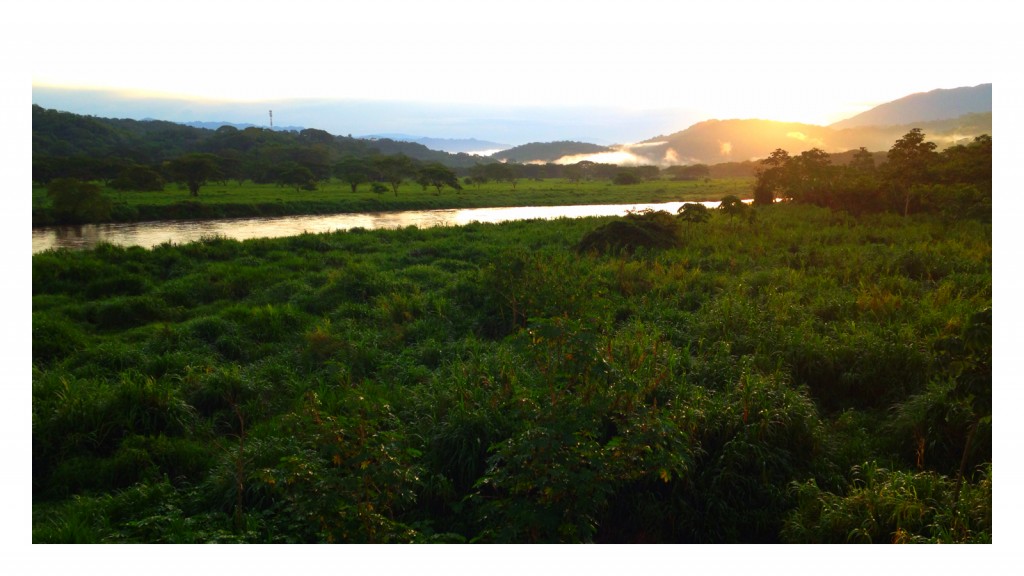
    Sunrise over the   Rio Grande de Tarcoles, where thousands of American Crocodiles make their home.
    Sunrise over the Rio Grande de Tarcoles, where thousands of American Crocodiles make their home.
  • A fresh take on fruit

    A fresh take on fruit

    Studying takes a turn for the delicious at Academia Tica’s fruit tasting class, where we sample some of Costa Rica’s most sumptuous offerings. After an hour at this mouth-watering table we know our mangos from our mangas, our guanabanas from our guabas, our nances from our elbows.

    In Costa Rica fruit is a USD $1.5 billion a year industry, accounting for 84 percent of the country’s agriculture, according to statistics from the United Nations Food and Agriculture Organization. Pineapple production in particular increased 42% from 2009-2013, mostly exports grown on huge plantations.

    Still, locally-grown small-scale fruit is easy to find at outdoor markets and roadsides. Fruity drinks and smoothies (called naturales and batidos respectively) can be found virtually everywhere food and drinks are sold. Local chains for these kind of beverages have flourished over the last couple of years.

    Because it has rich volcanic soils, tropical climates and temperate zones, Costa Rica produces an astonishing variety of fruits, many indigenous to Central America and many imported from Asia. At this Tuesday’s tasing class, students try just a smattering of what’s in season.

    • Guaba – Commonly known as a the the ice-cream bean, large green pods contain black seeds with a thick white juicy pulp that tastes slightly like vanilla ice cream
    • Granadilla – Known as passionfruit in the English-speaking world. Easily peeled by hand, the edible black seeds are coated in a slippery, brain-like goo, which smells as sweet as it tastes. Its tangy cousin the maracuya is more popular for drinks and smoothies.
    • Manga – the ultimate tropical treat imported to this hemisphere after thousands of years of cultivation in Asia, prolific in Costa Rica and much of Latin America, sweet, often fibrous with a stone like center.
    • Mango – Small green cousins of larger, riper mangas
    • Limon dulce – Sweet limes are another native of Asia. The flavor is sweet and mild, but retains the essence of lime. Less acidic than most citrus, can be bitten right into but more popular in drinks.
    • Nances – Strong-smelling cherry-like fruits that are popularly used in regional wine called vino de nances.
    • Pina – Pineapple is Costa Rica’s fastest growing export. Delicious but when produced on such a large scale, environmentally dubious.
    • Sandia – Watermelon is prolific in Costa Rica. Originally from Africa and actually considered by botanists to be a special kind of berry with a hard rind.
    • Papaya – A native of Central American, papaya has fed its inhabitants for thousands of years. The sweet orange flesh is also known to have numerous medicinal applications.
    • Carambola – Descriptively known as the starfruit for its shape, this native of Asia has a punchy, acidic flavor.

    Other fruits common in Costa Rica include the dietary staples plantains and avocados.

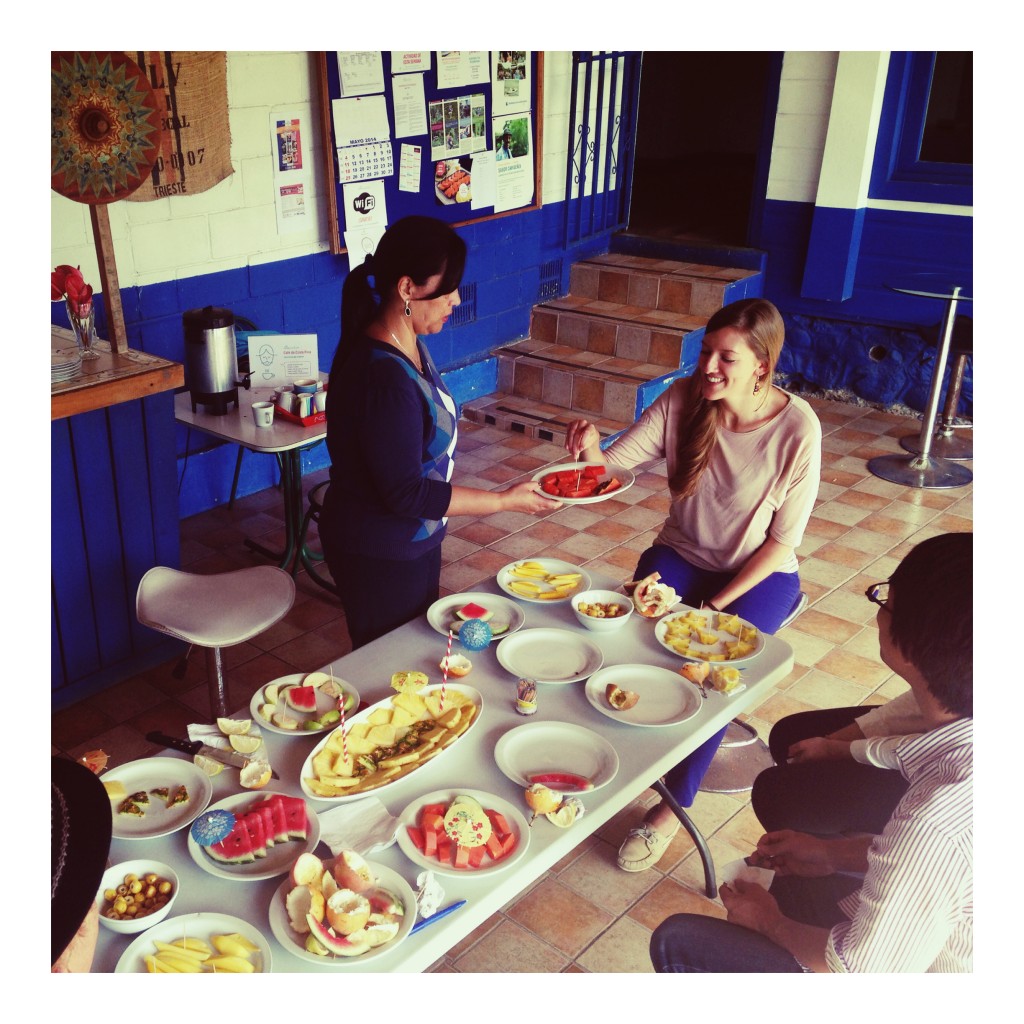
    Academia Tica students sample the fruits of Costa Rica — diverse, abundant and so tasty!
  • Into the volcano! (one of them anyway)

    Into the volcano! (one of them anyway)

    The distinction between earth and sky seems more an ongoing negotiation than a fact from atop Irazú, the tallest active volcanic peak in Costa Rica and an easy half-day trip from Academia Tica’s Coronado campus.

    There are more clouds below us than above on this dry May morning. They unfurl at our feet like plush white carpets reaching all the way to the Caribbean Gulf on one side and the Pacific on the other.

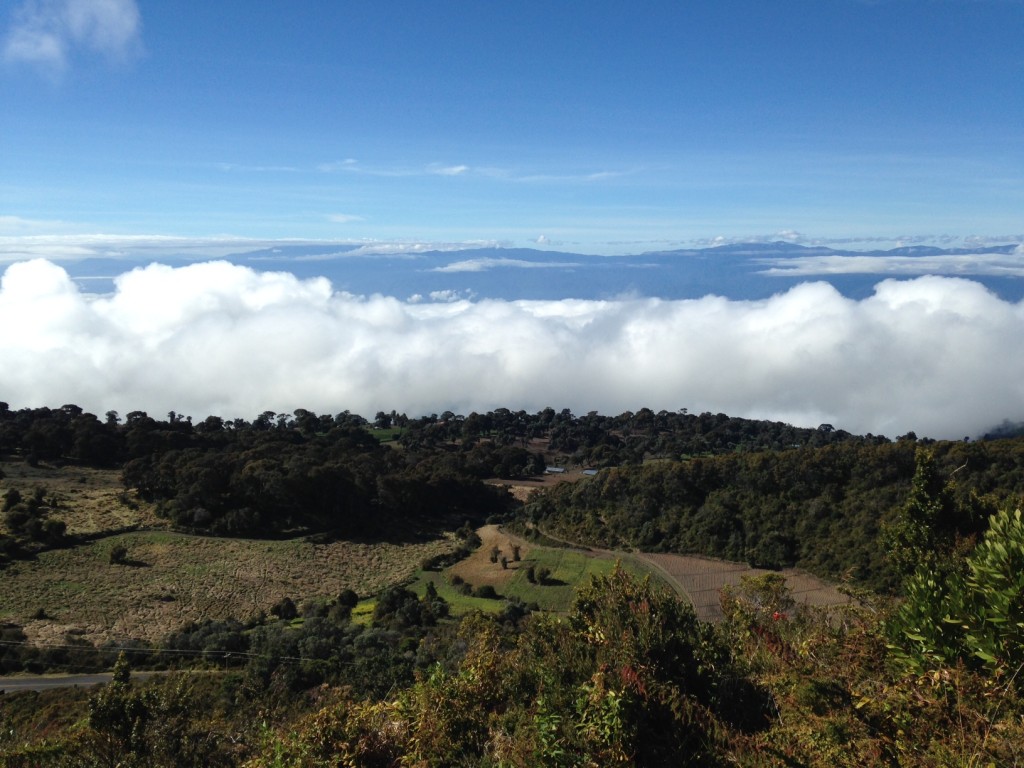
    The view from a ridge line above the principal crater at Parque Nacional Volcan Irazu, the highest volcanic peak in Costa Rica, an easy and incredibly scenic day trip from Academia Tica Coronado.

    On a clearer day we could see two oceans at once, a staggering perspective unique to this place in Central America. But even in the company of clouds and intermittent fog we can take in all of Central Costa Rica, a dense mosaic of rain forests, farm, rivers and mountains, home to over 500,000 thousand species of life and counting.Looking away from the limitless horizon to the black sand underfoot. Eyes plummet 300-meters down to the bottom of Irazu’s principal crater, a monumental hole in the ground painted lifeless grays and blacks by the same process that created the brilliant greens surrounding us, highly productive and populated agricultural regions.

    Irazú formed in the Pleistocene era, (between 2 million and 12,000 years ago). In the past 100 years the volcano has experienced seven eruption cycles, the latest occurring from 1963-65, when debris choked rivers and flooded the city of Cartago. San Jose (and nearby Academia Tica) are a much safer distance away, though one account recorded 20 inches of ash falling on parts of the city during the 1963-65 eruptions. While often pictured with an ephemeral lake, Costa Rica is in the middle of a dry spell (by tropical standards), and the bottom of the crater is dry and visible this year. This ever shifting topography masks two roiling magma chambers another 3000 meters below the surface.

    Tempted to try out ground as nebulous and inviting as the sky, but signs warn us that gravity slides can result from the slightest disturbance of the barren slopes. The national park here provides drive-up access and paved paths to the principal crater, utilizing a relatively stable terrace on the south side called Playa Hermosa, where hardy plants and animals stake claim on the volcanoes first habitable areas.

    Scraggly tufts of grass dotting Playa Hermosa eventually thicken enough to host picnicking Tico families, low shrubs make a tenuous comeback, and then the first fierce little Myrtle trees post up. Sparseness ends abruptly at a tree line so dense we can only hear the human visitors laughing, scrambling and clamoring within it. Climbing into this forest on the edge of desolation, we startle hummingbirds and lizards galore, ascending to a ridge above the principal crater where we are rewarded with even more epic views of this strange and wonderful place.

    Uniquely accessible for an active volcano, Parque Nacional Volcan Irazu is an easy day trip for students at Academia Tica, who can go with an organized tour group or independently via bus, rental car or taxi. Irazu is but one of many volcanoes that forge the highland backbone of Costa Rica.